Industrial pipe manufacturing
The wrong material can lead to corrosion, leaks, costly maintenance, and unexpected downtime. The right choice, however, can improve efficiency, increase safety, and extend the life of the entire system.
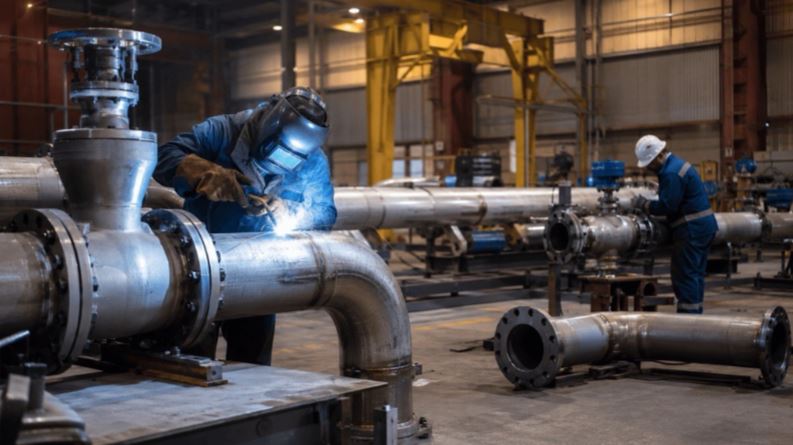
Every industrial environment presents unique challenges. Temperature, pressure, fluid composition, and environmental conditions all influence how a piping system performs over time.Before selecting a material, engineers and facility managers should evaluate:
Operating temperature
Internal pressure requirements
Chemical compatibility
Environmental exposure
Maintenance expectations
Installation costs
Expected service life
A thorough evaluation helps ensure long-term reliability and lower operating costs.
Carbon steel remains one of the most widely used materials in industrial piping due to its strength and affordability.
It performs well in applications involving:
Oil and gas
Fire protection systems
Steam distribution
Compressed air systems
Industrial manufacturing
Although carbon steel offers excellent mechanical properties, it can be vulnerable to corrosion in certain environments, making protective coatings or maintenance programs essential.
Stainless steel is often chosen for applications where cleanliness and corrosion resistance are critical.Industries that commonly rely on stainless steel include:
Food processing
Pharmaceutical manufacturing
Chemical processing
Beverage production
Water treatment facilities
Its resistance to rust and chemical attack helps reduce maintenance requirements while providing a longer service life.
Modern industrial facilities increasingly utilize plastic piping materials such as PVC, CPVC, and HDPE.
Advantages include:
Lightweight installation
Corrosion resistance
Lower installation costs
Reduced maintenance
Excellent chemical compatibility
These materials are commonly found in water treatment plants, chemical handling systems, and irrigation applications.
Not all materials perform equally under extreme operating conditions.
High-temperature applications often require metal piping capable of withstanding thermal expansion and pressure fluctuations. Conversely, lower-temperature systems may benefit from lightweight materials that simplify installation and reduce costs.
Understanding system operating conditions is essential for making the right decision.
Many organizations are now considering environmental impact when designing industrial facilities.
Durable materials that require fewer replacements contribute to waste reduction and improved sustainability. Additionally, recyclable metals and efficient piping systems help companies achieve environmental goals while maintaining operational performance.
Choosing the right piping material is a strategic investment that affects safety, efficiency, maintenance costs, and operational performance.By carefully evaluating operating conditions, environmental factors, and long-term objectives, facilities can select materials that provide dependable service for years to come.A well-designed piping system begins with the right material, ensuring that industrial operations remain efficient, safe, and prepared for future challenges.