Industrial pipe manufacturing
Today, industries are shifting toward eco-friendly piping solutions that reduce environmental impact while maintaining performance, safety, and efficiency
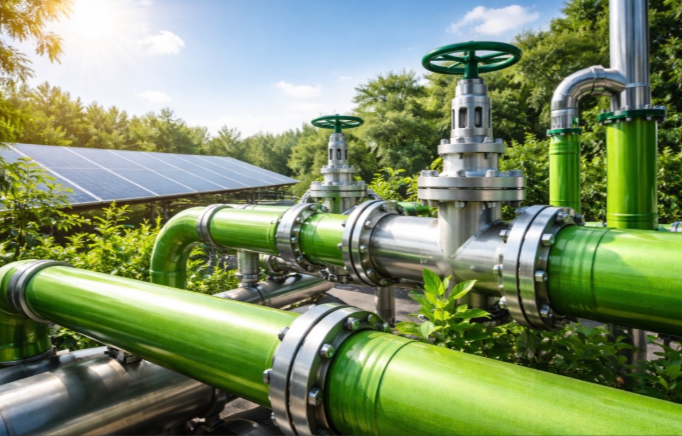
Why Sustainability Matters in Industrial Piping
Sustainable piping systems help companies:
• Reduce carbon footprint
• Lower long-term operational costs
• Minimize waste and material loss
• Improve energy efficiency
• Meet environmental regulations and ESG goals
By integrating sustainability into piping design and maintenance, businesses can achieve both economic and environmental benefits.
Eco-Friendly Materials for Industrial Piping
1. Recycled and Recyclable Metals
Materials like stainless steel, aluminum, and copper can be recycled multiple times without losing their structural integrity. Using recycled metals reduces mining demand and lowers energy consumption during production.
2. High-Density Polyethylene (HDPE)HDPE piping is lightweight, corrosion-resistant, and has a long service life. Its flexibility reduces the need for fittings and joints, minimizing potential leaks and maintenance.
3. Polypropylene (PP) and PVC AlternativesNewer formulations of PP and eco-friendly PVC are designed to be safer, more durable, and less harmful to the environment compared to traditional plastics.
4. Composite and Advanced MaterialsFiber-reinforced polymers and composite piping materials offer high strength with reduced weight, improving transportation efficiency and reducing installation emissions.
Sustainable Design Practices
Implementing sustainable piping is not only about materials—it also involves smart design strategies, such as:
• Optimized routing to reduce material use
• Energy-efficient pumping systems
• Leak detection technologies to prevent resource loss
• Modular designs that allow easy replacement and upgrades
Designing with efficiency in mind reduces both environmental impact and operational costs.
Energy Efficiency in Piping Systems
Energy consumption is a major factor in industrial operations. Sustainable piping systems improve efficiency through:
• Proper pipe sizing to reduce friction losses
• Smooth interior pipe surfaces
• Insulation to prevent heat loss
• Efficient pump and flow control systemsThese measures reduce energy use and improve overall system performance.
Maintenance and Lifecycle Management
A sustainable piping system is one that lasts longer and performs efficiently over time. Best practices include:
• Preventive maintenance programs
• Regular inspections and testing
• Corrosion protection techniques
• Timely repair of leaks or damaged components
Extending the lifespan of piping systems significantly reduces waste and replacement costs.
Regulatory Compliance and Environmental Standards
Industries must comply with environmental standards and regulations related to emissions, water usage, and waste management. Sustainable piping helps organizations align with:
• Environmental protection laws
• Industry safety standards
• Corporate sustainability commitmentsCompliance not only reduces legal risk but also enhances a company’s reputation.
Future Trends in Sustainable Industrial Piping
The future of industrial piping is being shaped by innovation, including:
• Smart sensors and IoT monitoring systems
• Predictive maintenance using AI
• Advanced corrosion-resistant materials
• Low-impact manufacturing processesThese technologies will continue to improve sustainability and efficiency across industries.
Sustainable industrial piping is no longer optional—it is a strategic necessity. By choosing eco-friendly materials, optimizing design, and implementing efficient maintenance practices, companies can significantly reduce their environmental footprint while improving performance and cost efficiency.Investing in sustainable piping solutions today ensures long-term operational success and environmental responsibility for the future.