Industrial pipe manufacturing
Although pipe identification may seem like a minor detail, proper labeling and color coding play an important role in workplace safety, maintenance efficiency, and daily operations. A clearly identified piping system helps employees understand what each pipe carries and reduces the risk of costly mistakes.
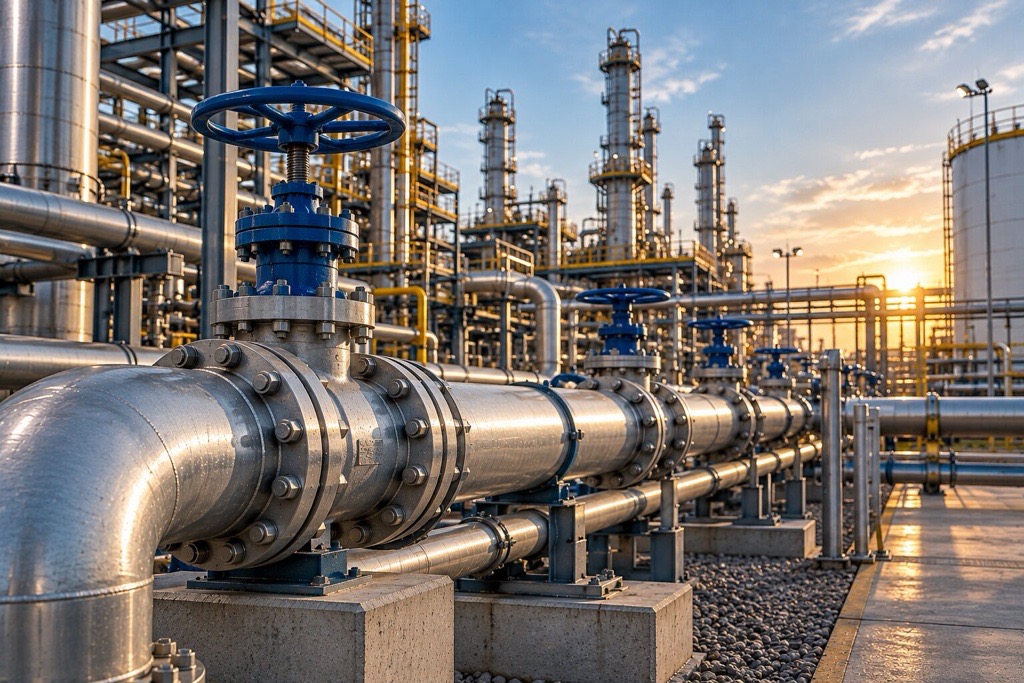
In busy industrial environments, maintenance teams and operators frequently work around complex piping networks. Without clear identification, locating the correct pipeline can become time-consuming and potentially dangerous.
Proper pipe markings allow workers to recognize the contents of a pipe, understand the direction of flow, and identify potential hazards.This information becomes especially valuable during maintenance procedures, equipment inspections, and emergency situations.
Clear identification also helps new employees become familiar with a facility’s infrastructure more quickly.
Color coding is commonly used to distinguish between different types of piping systems.Depending on the applicable standard and facility requirements, specific colors may represent water, compressed air, flammable fluids, or hazardous chemicals.In the United States, ANSI/ASME A13.1 provides guidance for identifying fluids conveyed through piping systems, including the use of color combinations and labels.
However, color alone is not always sufficient. Effective identification typically includes written information about pipe contents and arrows indicating flow direction.Facilities should follow the standards and regulatory requirements applicable to their operations.
A properly labeled piping system can make maintenance activities significantly easier.When technicians need to inspect a particular line, clear identification helps them locate the correct equipment without unnecessary delays.
This is particularly important in facilities where multiple pipelines run parallel to one another or pass through confined spaces. Accurate identification can also support maintenance planning, troubleshooting, and coordination between engineering and operations teams.
By reducing confusion, companies can improve productivity while minimizing the likelihood of human error.
During an emergency, identifying the contents of a pipeline quickly can be critical.A leak involving water presents different risks from one involving steam, compressed gases, or hazardous chemicals.
Proper pipe identification helps emergency personnel and facility operators recognize potential hazards and make informed decisions.Although labeling does not replace emergency procedures or safety training, it provides an additional layer of information that supports safer responses.
Industrial facilities evolve over time. Equipment is replaced, production processes change, and piping networks are modified to accommodate new operational requirements.Whenever these changes occur, pipe identification should be reviewed and updated accordingly.
Damaged, faded, or outdated labels can create confusion and reduce the effectiveness of an otherwise well-organized system.
Regular inspections should therefore include checking that pipe markings remain visible, accurate, and consistent with facility documentation.
Investing in proper pipe identification is relatively simple compared with many other industrial improvements, yet its benefits can extend throughout the entire facility.
Clear markings help support efficient maintenance, better communication, safer operations, and more organized infrastructure.
For companies managing complex piping networks, an effective identification system is an important part of responsible facility management.